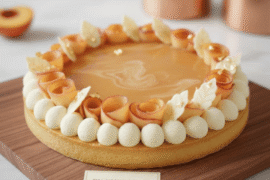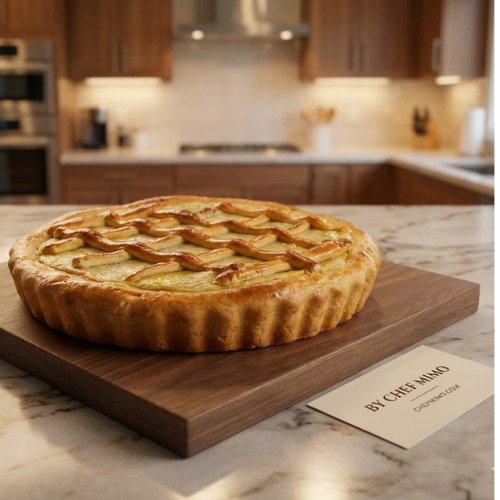
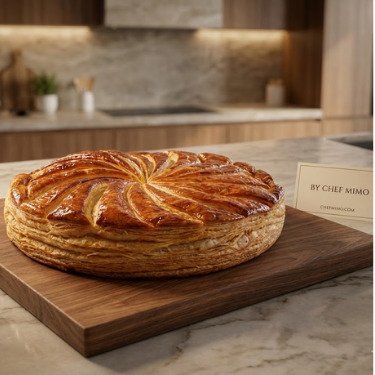
✨ A Royal Twist: A luxurious variation of the French Epiphany classic, featuring a melt-in-your-mouth hazelnut cream dotted with chunks of rich Gianduja chocolate.
The Galette des Rois (King Cake) is a serious tradition in France, celebrated throughout January. While the classic version is filled with almond frangipane, this recipe from Les Yeux Grognons elevates the experience by swapping the traditional filling for a decadent Hazelnut and Gianduja Cream.
Gianduja is an Italian treasure—a smooth blend of chocolate and hazelnut paste (think of it as the solid, gourmet ancestor of Nutella). In this recipe, cubes of Gianduja are hidden inside the creamy filling, creating pockets of melting chocolate richness against the flaky, buttery puff pastry. This recipe also utilizes a professional “flipping” technique to ensure a perfectly flat, smooth surface for scoring those intricate patterns that make the Galette so iconic. It is the perfect centerpiece for a winter gathering, combining the crunch of puff pastry with the comforting warmth of roasted hazelnuts.
🥣 INGREDIENTS
Here is the table of ingredients (for a 24 cm / 9.5-inch Galette):
| Component (Section) | Quantity | Notes |
| 🥧 The Base | ||
| Puff Pastry (Pâte Feuilletée) | 500g | (Approx. 1.1 lbs) Classic or Inverted |
| Egg Yolk | 1 | For the egg wash |
| Heavy Cream | 1 tbsp | For the egg wash |
| Fève (Ceramic Charm) | 1 | The hidden prize! |
| 🌰 Hazelnut Gianduja Cream | ||
| Softened Butter | 120g | Room temp (“Pommade”) |
| Sugar | 105g | |
| Eggs | 70g | Approx. 1.5 large eggs (weigh it!) |
| Hazelnut Flour (Meal) | 90g | |
| Almond Flour (Meal) | 30g | |
| Cornstarch | 15g | |
| Gianduja | 70g | Cut into small cubes |
Note: If you cannot find block Gianduja, you can make a quick version by melting milk chocolate with hazelnut praline paste, or use high-quality solid milk chocolate with hazelnuts.
👩🍳 PREPARATION STEPS (Step-by-Step)
The steps are presented in the exact sequential order as the original source to ensure the text matches your images.
Step 1: The Hazelnut Gianduja Cream
-
In a mixing bowl, whisk the softened butter with the sugar until creamy.
-
Add the eggs (room temperature) and mix well to emulsify.
-
Incorporate the hazelnut flour and almond flour into the mixture.
-
Finally, add the cornstarch and mix until smooth.
-
Cover and refrigerate the cream until you are ready to assemble.
Step 2: Assembly
-
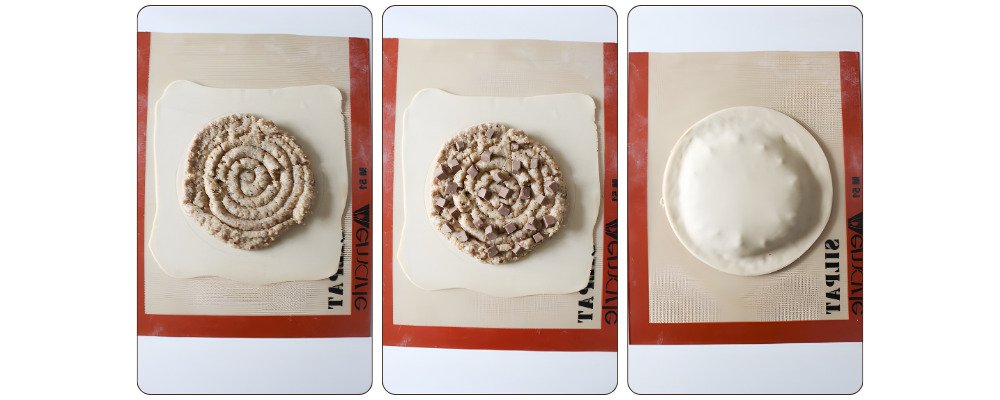 Roll out your puff pastry and cut two discs: one slightly smaller (approx. 24cm) and one slightly larger (approx. 25cm).
 -
Place the smaller disc on a baking sheet lined with parchment paper.
-
Pipe (or spread) the Hazelnut Cream in the center, leaving a 2 cm (approx. 1 inch) border clear around the edges.
-
Distribute the cubed Gianduja evenly over the cream.
-
Crucial Step: Place the Fève (charm) somewhere in the cream (preferably near the edge to minimize the risk of cutting into it).
-
Lightly moisten the bare border with a little water (use a brush or your finger).
-
Place the second (larger) pastry disc on top.
-
Press the edges firmly with your fingers to seal the two doughs together. You can use the back of a knife to “crimp” (chiqueter) the edges for a decorative seal.
Step 3: The Flip & Glaze (The Professional Secret)
-
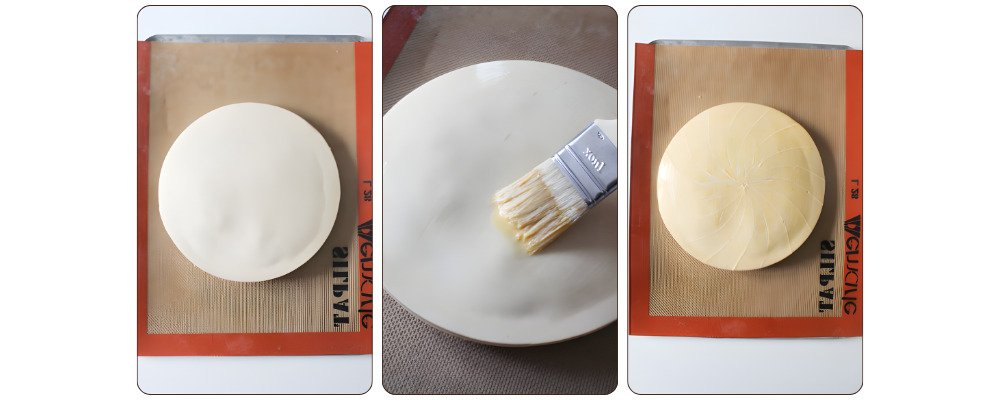 The Flip: Carefully turn the galette upside down so the flat side (that was on the baking sheet) is now facing up. This ensures a perfectly smooth surface for decoration.
 -
Mix the egg yolk with the heavy cream.
-
Brush this glaze over the top of the galette.
-
Place the galette in the refrigerator for 1 hour. This dries the glaze and chills the butter in the dough, which is essential for a good rise.
Step 4: Scoring & Baking
-
Preheat your oven to 180°C (350°F).
-
Take the galette out of the fridge. If you want a darker finish, you can apply a second coat of glaze now.
-
Using the back of a knife (dull side), score a pattern into the top of the pastry. (Classic patterns include curves, diamonds, or wheat ears). Be careful not to cut all the way through the dough.
-
Poke a few small holes (chimneys) in the scored lines to let steam escape.
-
Bake for approximately 40 to 45 minutes until the galette is puffed and deeply golden brown.
-
Let it cool slightly on a rack before serving warm.
Chef’s Guide & Conclusion
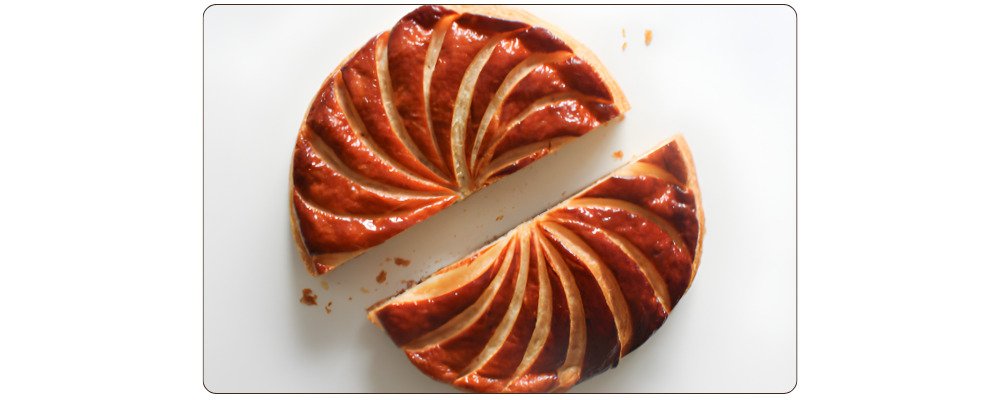
You have just baked a Galette des Rois that rivals those found in Parisian bakeries. The addition of hazelnut and Gianduja transforms this from a simple pastry into a rich, nutty indulgence. Here are a few professional tips to ensure perfection:
The “Flip” Technique:
You might wonder why we flip the galette in Step 3. When you hand-seal the edges, the top often looks messy or uneven. By flipping it over, the smooth bottom becomes the top, providing a flawless canvas for your knife scoring. It also helps the galette rise evenly without lopsided “mountains.”
Preventing Leakage:
The nightmare of every baker is the filling exploding out of the sides.
-
Don’t over-wet the edges: Too much water makes the dough slip rather than stick.
-
Rest is best: The 1-hour rest in the fridge is non-negotiable. It solidifies the butter, gluing the layers together before the heat hits them.
-
The Chimneys: Don’t forget to poke 3-4 small holes in the top pattern to release steam; otherwise, the pressure will blow out the sides.
Serving:
The Galette is best served warm. If you bake it in advance, reheat it in a 150°C (300°F) oven for 10 minutes. The tradition dictates that the youngest person at the table sits under the table and calls out the name of the person to receive each slice, ensuring the distribution of the “Fève” is entirely random. Whoever finds the charm is crowned King or Queen for the day!