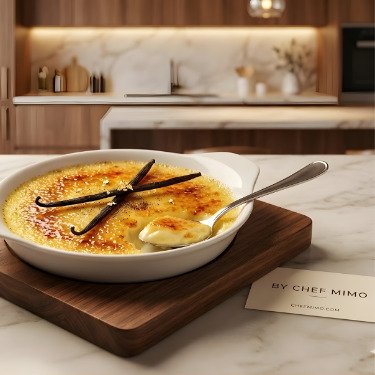
✨ The Ultimate Creaminess: A recipe by the renowned Ritz Paris pastry chef, featuring a silky texture that melts in the mouth without ever becoming rubbery.
This recipe is considered by many as the “Holy Grail” of Crème Brûlées. Sourced from the repertoire of François Perret, the “World’s Best Restaurant Pastry Chef” (2019), it focuses on one key element: texture. Unlike standard recipes that can turn into sweet omelets if mishandled, this version uses a high ratio of liquid cream and a precise low-temperature baking method to ensure the center remains tremblotante (wobbly) while the edges set perfectly.
The magic lies in the infusion of vanilla and the “cold cream” technique, which prevents air bubbles from forming, giving you that flawlessly smooth surface under the crack of the caramelized sugar. It is a dessert of patience and precision, perfect for impressing guests with a classic that has been elevated to luxury standards.
🥣 INGREDIENTS
Here is the table of ingredients (For approximately 10 servings):
| Component | Quantity | Notes |
| 🥛 The Cream Base | ||
| Vanilla Bean | 1 whole | Scraped (seeds & pod) |
| Whole Milk | 270g | |
| Egg Yolks | 170g | Approx. 10 yolks (depending on size) |
| Granulated Sugar | 110g | |
| Heavy Cream (Liquid) | 750g | 30% fat minimum (cold) |
| 🔥 The Finish | ||
| Cassonade (Brown Sugar) | As needed | For caramelization |
👩🍳 PREPARATION STEPS (Step-by-Step)
The steps are presented in the exact sequential order as the original source to ensure the text matches your images.
Step 1: The Infusion
-
Heat the milk in a saucepan with the vanilla bean (split and scraped).
-
Cover the saucepan and let it infuse for at least 30 minutes.
-
Note: The author infused it for 2 hours for maximum flavor.
-
 Step 2: The Mixture
-
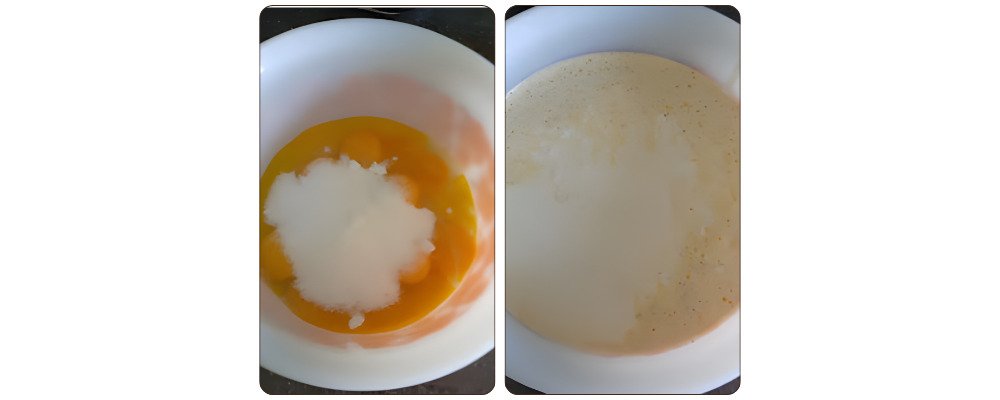
Whisk the egg yolks with the sugar vigorously until the mixture whitens (pale yellow).
-
Bring the vanilla milk back to a boil.
-
Pour the hot milk over the yolk/sugar mixture while stirring constantly.
-
Mix until homogeneous, trying not to incorporate air bubbles.
Step 3: Adding the Cream & Straining
-
Immediately add the cold heavy cream to the warm mixture.
-
Mix gently with a spatula (maryse) to blend without creating foam.
-
Strain the preparation through a fine-mesh sieve (chinois) to remove the vanilla pod and any chalaza.
-
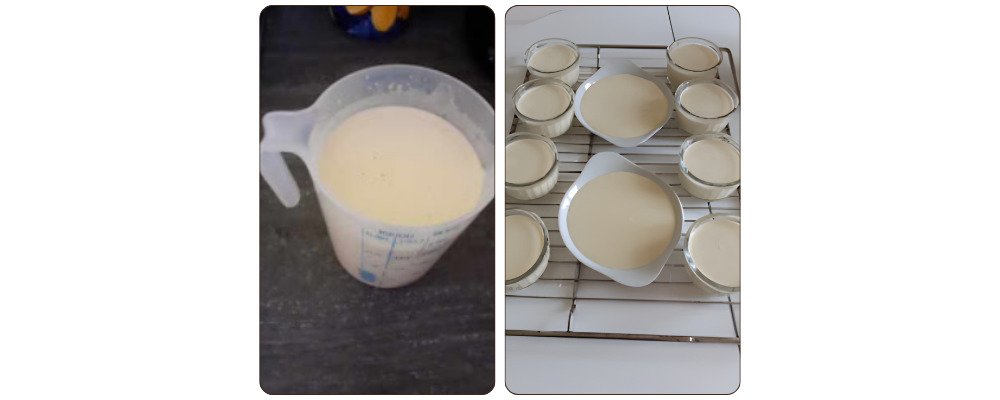
Pour the mixture into a pouring pitcher (to make filling easier).
Step 4: Baking (The Critical Step)
-
Preheat your oven to 90°C (195°F).
-
Fill your ramekins with the cream mixture.
-
Place them in the oven. The original recipe suggests 30 minutes at 90°C followed by 30 minutes at 95°C.
-
Note from the author: This time was insufficient for her oven/ramekins. She extended the baking by 1 hour at 100°C (212°F).
-
Crucial: Never exceed 100°C, or you will get “omelets” (curdled texture).
-
-
Doneness Test: The cream is ready when the edges adhere to the ramekin, but the center remains “tremblotante” (jiggly like jelly).
Step 5: Caramelization
-
Let the creams cool down to room temperature, then refrigerate for several hours (essential for the texture to set).
-
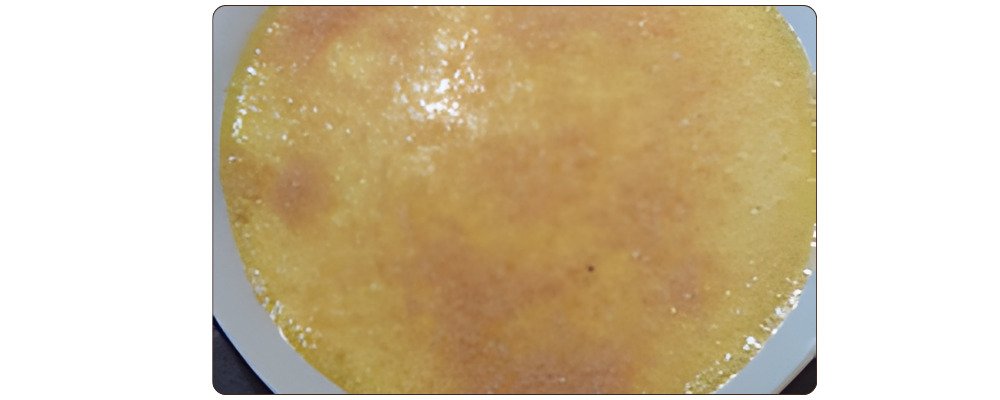
Just before serving, sprinkle a thin layer of cassonade (brown sugar) over the entire surface.
-
Tip the ramekin upside down to remove any excess sugar (you want a thin, even layer).
-
Caramelize (burn) the sugar using a kitchen torch until golden and crisp.
Chef’s Guide & Conclusion
You have just prepared a Crème Brûlée worthy of a 5-star hotel. The difference between a good crème brûlée and an exceptional one lies in the baking. If you see bubbles on the surface or if the texture feels grainy, the oven was likely too hot. François Perret’s method of adding cold cream at the end and baking low and slow ensures that “creamy” texture that contrasts so beautifully with the hot, crisp sugar shell.
Key Success Factors:
-
No Water Bath: Unlike many home recipes, this professional method often relies on precise oven air temperature rather than a bain-marie, provided you keep the temp under 100°C.
-
The Sugar Crust: For the best “crack,” wait a few seconds after torching for the sugar to harden. If you like a thicker crust, torch one thin layer, let it set, sprinkle a second layer of sugar, and torch again.
-
Serving Temperature: The contrast is key—the cream must be cold from the fridge, and the crust must be warm from the torch. Serve immediately!